


Rusalka - littel mermaid
Orchestration
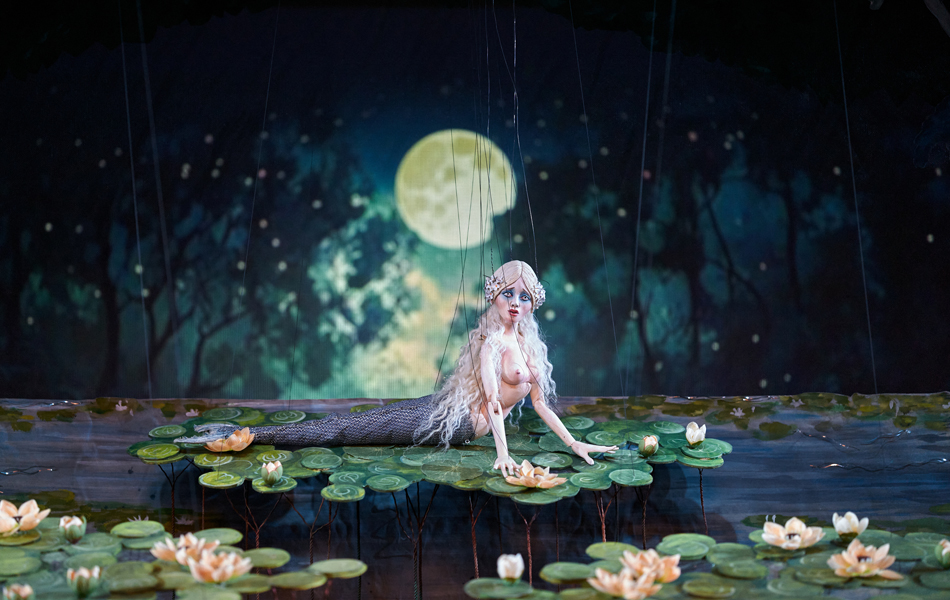
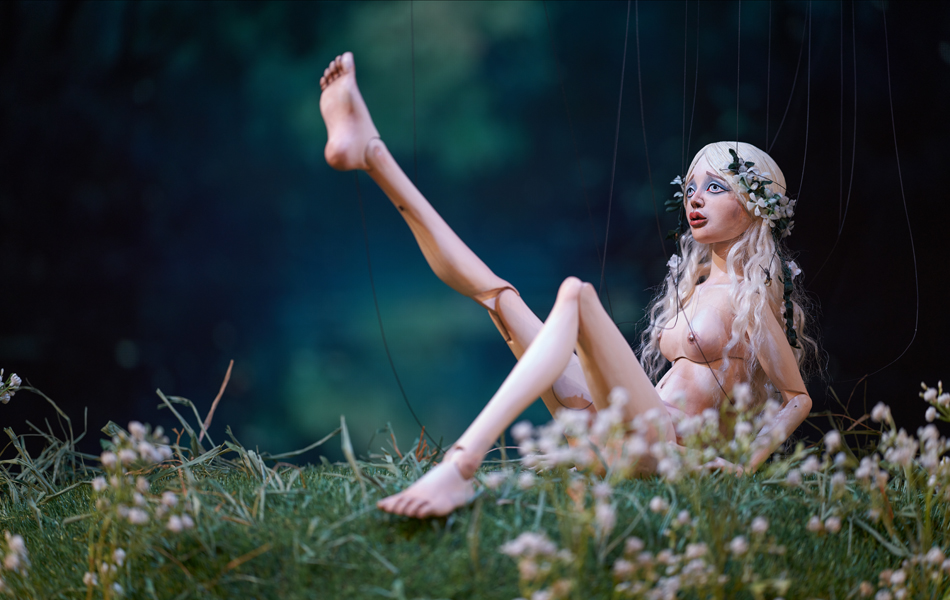
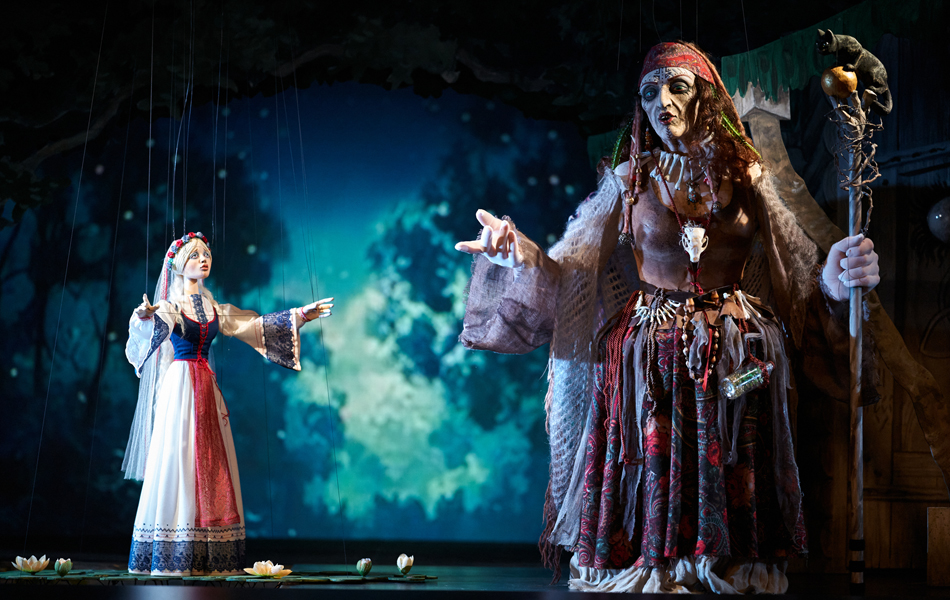
While searching for suitable material for our marionette opera, we stumbled upon "Rusalka" in the early years of our theater. Because of its fairytale-like narrative and fantastical creatures, the opera is practically ideal for being told with puppets. However, many years had to pass before we decided to include Antonín Dvořák's masterpiece in our repertoire. Above all, the collaboration with puppet maker Martin Gobsch gave us the confidence to overcome the visual and technical challenges. Under Gobsch's hands, the most magnificent characters of the underwater and above-water worlds came to life. The stage machinery was specially modified for this production and enhanced with numerous playful elements.

Story
"Rusalka" is Antonín Dvořák's most successful opera. It was composed in 1900 to a libretto by Jaroslav Kvapil and premiered on March 31, 1901, at the Prague National Theatre. The libretto draws on Slavic folk myths about the Rusalky (water spirits, mermaids) and is similar to the German tale "Undine," Hans Christian Andersen's fairy tale "The Little Mermaid," and the Old French legend of Melusine. However, since Disney's "The Little Mermaid," the story of the mermaid who longs to become human has become universally known. Unlike the animated classic, however, the opera "Rusalka" does not have a happy ending.